

Realtor vs. Broker: Key Differences Explained
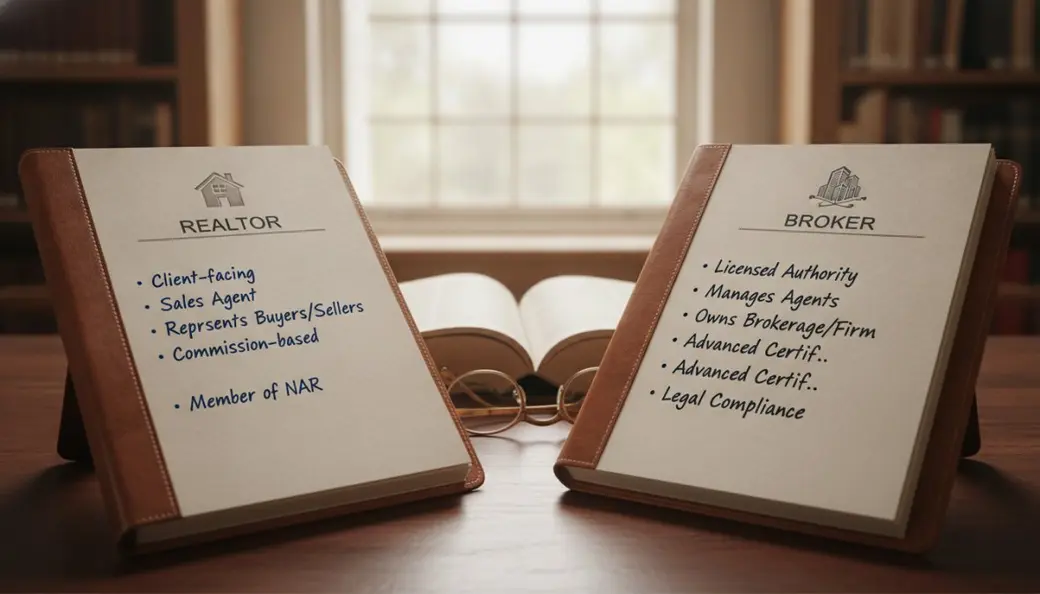
Table of Contents
- What Is the Difference Between a Realtor and a Broker?
- Understanding Real Estate License Requirements
- The Role of NAR and REALTOR® Designation
- How Real Estate Commissions and Splits Work
- Key Differences: Agent, Broker, and Realtor Side by Side
- What This Means for Fresno and Clovis Home Buyers and Sellers
- Conclusion
Last Updated: June 21, 2026
Knowing the difference between a realtor and a broker is essential before signing anything. At Parminder Kang Realtor®, we hear this question constantly from clients in Fresno, Clovis, Madera, and throughout the Central Valley. Most people assume all real estate professionals are the same. They are not. The title someone holds determines their legal authority, training level, and how much protection you have during one of the biggest financial decisions of your life.
What Is the Difference Between a Realtor and a Broker?
A real estate broker is a licensed professional who has completed additional education and passed a higher-level state exam, giving them legal authority to operate independently and manage other agents. A REALTOR® is a member of the National Association of Realtors (NAR) who has agreed to follow a strict Code of Ethics. A real estate agent is a salesperson who holds a basic license and must work under a supervising broker.
The Core Distinction
An agent cannot legally close a real estate transaction independently. Every agent must work under a broker's license. A broker can operate independently, own a brokerage firm, and take direct legal responsibility for transactions.
The REALTOR® designation is not a license, it is a membership. Any licensed agent or broker can become a REALTOR® by joining NAR, paying membership dues, and committing to the organization's Code of Ethics.
Think of it this way: all REALTORS® are either agents or brokers, but not all agents or brokers are REALTORS®.
Why This Matters for Buyers and Sellers 🏡
If you are buying a home in Fresno's Tower District or selling in northeast Clovis, your professional's license affects your legal protections. A broker carries greater liability for the transaction. If something goes wrong, a broker-in-charge has direct accountability that a salesperson does not have.
Knowing who you are working with before signing a buyer's representation agreement protects you.
Understanding Real Estate License Requirements
California's licensing standards are among the more demanding in the country. Understanding the licensing ladder helps you evaluate who you are hiring.
What It Takes to Become a Real Estate Agent
Becoming a real estate salesperson in California requires completing 135 hours of approved pre-licensing coursework, passing the California Department of Real Estate (DRE) salesperson exam, and securing a sponsoring broker before the license activates. Applicants must also pass a background check and meet age requirements.
Once licensed, agents must complete continuing education to renew. The agent cannot operate without being attached to a licensed broker. Every listing, purchase contract, and transaction flows through the brokerage firm.
The Broker License: A Higher Standard
Earning a broker license requires significantly higher qualifications. Candidates must first work as a licensed agent for a set period, complete additional coursework, and pass a more comprehensive exam. The broker license grants the holder the right to operate a brokerage, hire and supervise agents, and handle trust accounts independently.
Brokers carry more legal exposure. If an agent under their supervision makes an error, the supervising broker shares responsibility.
California's Specific Requirements 🌴
California has a two-tier system: the salesperson license and the broker license. To qualify for a California broker license, applicants must have at least two years of full-time licensed salesperson experience within the last five years, complete 360 hours of DRE-approved broker-level courses, and pass the broker exam.
California requires brokers to maintain "reasonable supervision" over their agents. This is a regulatory standard, not optional language. For Central Valley buyers and sellers, having a broker who is actively engaged is a real competitive advantage.
The Role of NAR and the REALTOR® Designation
The REALTOR® designation carries specific obligations beyond state licensing requirements.
What REALTOR® Actually Means
A REALTOR® is a licensed real estate professional who is an active member of the National Association of Realtors (NAR). NAR membership requires adherence to a Code of Ethics covering duties to clients, the public, and other professionals.
The REALTOR® designation typically includes access to the Multiple Listing Service (MLS), the database where properties are listed and shared among cooperating agents. MLS access is critical for marketing your home or finding properties.
Code of Ethics and Professional Standards
The NAR Code of Ethics, established in 1913, requires REALTORS® to put client interests first, be honest in advertising, and cooperate with other professionals. Violating the Code can result in disciplinary action through the local REALTOR® association, including fines, required education, and loss of membership.
A REALTOR® who misleads you can face consequences from both the state regulatory board and their professional association. That dual accountability matters.
How Real Estate Commissions and Splits Work 💰
Commission structures are one of the least understood parts of a real estate transaction.
Commission Structures Explained
Real estate commissions are negotiable in California. The commission is typically paid by the seller from sale proceeds and is split between the listing brokerage and the buyer's brokerage. Within each brokerage, the commission is split between the broker and the individual agent based on a pre-agreed split.
A newer agent at a large brokerage might receive a smaller share. An experienced agent or independent broker keeps a larger portion.
Who Pays and How Much
The seller typically funds the commission at closing. The listing agent's broker and the buyer's agent's broker each receive their share as outlined in the listing agreement. Recent changes require more transparent conversations about commission agreements upfront.
Broker vs. Agent Commission Impact
When you hire an agent, a significant portion of commission flows to the brokerage, not just the individual. An independent broker keeps more of their commission, which sometimes means more flexibility to negotiate fees or invest in marketing.
Key Differences: Agent, Broker, and Realtor Side by Side
The practical differences come down to legal authority, supervisory responsibility, and professional accountability.

| Role | License Level | Can Work Independently? | REALTOR® Membership | Supervises Others? |
|---|---|---|---|---|
| Real Estate Agent | Salesperson license | No - must work under broker | Optional | No |
| Real Estate Broker | Broker license | Yes | Optional | Yes |
| REALTOR® (Agent) | Salesperson license | No | Yes - NAR member | No |
| REALTOR® (Broker) | Broker license | Yes | Yes - NAR member | Yes |
Licensing and Authority
A real estate agent holds a salesperson license. Their authority to conduct transactions is derived from their supervising broker. If that broker's license lapses, the agent cannot legally work.
A broker holds a separate, higher credential issued after meeting additional education and experience requirements. Brokers can open their own brokerage firms, hold client trust funds, and take direct legal responsibility for transactions.
Supervision and Responsibility
Agent supervision is a legal requirement in California. The DRE mandates that brokers provide reasonable supervision over their agents' activities, including reviewing contracts and monitoring compliance with real estate law.
When something goes wrong, the supervising broker is often named in legal action alongside the agent.
MLS Access and Client Representation
Both agents and brokers can access the MLS, typically through REALTOR® membership. In Fresno and Clovis, that means membership through the Fresno Association of REALTORS®.
MLS access determines how widely your home is marketed and how quickly a buyer's agent can find matching properties. It is the backbone of how property listing and client representation work in practice.
What This Means for Fresno and Clovis Home Buyers and Sellers
The Central Valley real estate market has distinct rhythms. Fresno neighborhoods like Fig Garden and McLane have different price trends than Clovis communities near Buchanan High School or newer developments off Shepherd Avenue.

Finding the Right Professional for Your Transaction
The most important question is not just "are you a REALTOR®?" but: what is your specific experience in this market, what is your license level, and who is your supervising broker?
A broker with deep roots in Fresno and Clovis brings knowledge an out-of-area agent cannot match: which neighborhoods are appreciating, which HOAs have known issues, and which listing strategies move homes in this specific market.
For sellers, working with a licensed broker who also holds REALTOR® status gives you the broadest protection. For buyers, the fiduciary duty and MLS access that come with a REALTOR® broker combination are significant advantages.
You can verify any California licensee's status through California DRE license lookup tool or confirm REALTOR® membership through NAR's official member verification.
Questions to Ask Before You Hire ✅
Before signing any representation agreement in California, ask these directly:
- Are you a licensed broker or a licensed salesperson?
- Are you a member of NAR and your local REALTOR® association?
- Who is your supervising broker, and how involved are they in your transactions?
- How long have you been working specifically in Fresno or Clovis?
- Can you show me recent closed sales in the neighborhoods I care about?
Choosing the right real estate professional in Fresno, Clovis, or the Central Valley is about finding someone with the right license, credentials, and genuine local knowledge. Parminder Kang Realtor® brings broker-level expertise, active REALTOR® membership, and deep familiarity with every neighborhood and price trend across Fresno and Clovis. Whether you are buying your first home or selling for maximum value, contact Parminder Kang Realtor® for a free home valuation and see exactly what your property is worth today.
Frequently Asked Questions
What is the difference between a realtor and a broker?
A broker holds a state real estate license that allows them to supervise agents and operate a brokerage firm. A realtor is a real estate agent who is also a member of the National Association of Realtors (NAR) and agrees to follow their Code of Ethics. Not all brokers are realtors, and not all agents are realtors, it depends on NAR membership. The key difference is authority: brokers can hire and manage agents; realtors follow stricter professional standards.
Do I need a realtor or a broker to sell my house in Fresno?
You need either a licensed real estate agent or broker to list your home in Fresno. Most sellers work with agents who work under a broker's license. A realtor (NAR member) offers added protection through their Code of Ethics and professional standards. In the Central Valley market, working with a local professional who knows Fresno neighborhoods and current price trends ensures you get maximum value for your property.
How do real estate commissions work between agents and brokers?
Commissions are typically paid by the seller (usually 5-6% of the sale price, split between buyer and seller agents). The broker takes a percentage from the agent's commission. The split varies by agreement, some brokers offer 80/20 or 70/30 splits to agents. Independent contractor agents negotiate their splits with the broker. Understanding commission structures helps you know what costs you'll face when buying or selling in California.
What are the real estate license requirements in California?
To become a real estate agent in California, you must pass the salesperson exam, complete required coursework, and work under a broker's supervision. To become a broker, you need a salesperson license first, plus additional experience (typically 2+ years) and pass the broker exam. California's Department of Real Estate oversees licensing. REALTOR® status requires NAR membership and adherence to their Code of Ethics. These requirements ensure professionals in Fresno and Clovis meet high standards.
Categories
Recent Posts