

Checklist for Selling a House for Maximum Profit

Table of Contents
- Boost Curb Appeal and First Impressions
- How to Stage a House for Sale That Sells Faster
- Home Improvement Projects for Resale Value Worth the Investment
- Get a Pre-Listing Inspection and Address Issues Proactively
- Price It Right With Comparable Sales and Market Data
- Negotiating Home Inspection Repairs and Seller Concessions
- Calculating Net Proceeds From Your Home Sale
- Hire a Listing Agent and Get Professional Photography
Last Updated: August 14, 2026
Selling a house for maximum profit isn't just about listing and hoping. It's about strategy, the kind of detailed planning that separates sellers who walk away disappointed from those who pocket serious equity. At Parminder Kang Realtor®, we've guided homeowners through this exact process, and the ones who follow a system consistently net more money than those who wing it.
The difference often comes down to preparation. Most sellers jump straight to listing without addressing the fundamentals: how the home looks, what repairs matter most, and whether they're priced competitively. That's where profit gets left on the table. Below are the eight critical moves that maximize what you'll actually take home.
Boost Curb Appeal and First Impressions
Your home's exterior is the first thing a buyer sees, and it sets the tone for everything that follows. In the Central Valley market, where homes sit under intense sun and dust, curb appeal directly impacts whether a buyer even wants to walk through the door.
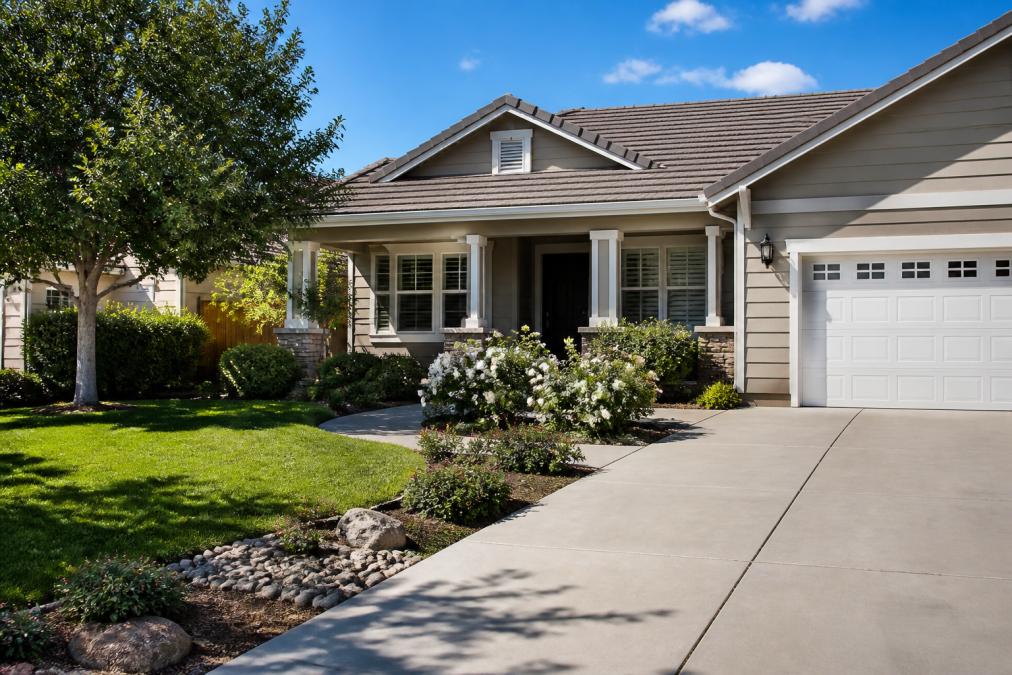
Start with basics. A fresh coat of paint on the front door, clean windows, and trimmed landscaping signal that the home is cared for. Power-wash the driveway and walkways, dirt and stains create the impression of neglect, even if everything underneath is fine. Replace outdoor lighting fixtures if they're dated. New house numbers and a clean mailbox matter more than most sellers realize.
Landscaping is your biggest visual opportunity. Dead plants need to go. Overgrown shrubs should be trimmed. Remove dead trees or branches. In neighborhoods like Fresno's Fig Garden District or Clovis's newer developments, buyers expect maintained yards. A few bags of mulch and seasonal flowers create polish without breaking the bank.
The goal isn't perfection, it's the impression that someone cares. Buyers make snap judgments, and curb appeal either invites them in or makes them question what they'll find inside.
How to Stage a House for Sale That Sells Faster
Staging a house for sale isn't about making it look like a showroom. It's about helping buyers visualize themselves living there. Empty rooms feel small. Cluttered rooms feel chaotic. The sweet spot is a home that feels spacious, clean, and move-in ready.

Start by depersonalizing. Family photos, personal collections, and bold artwork distract from the home itself. Remove at least half the items on shelves and countertops. In kitchens, clear counters down to essentials. In bedrooms, strip away throw pillows and excess bedding. The goal is a neutral canvas.
Deep clean everything. Get into baseboards, light fixtures, and inside cabinets. Buyers notice dust and grime, and they assume if you didn't maintain these details, what about the roof and HVAC? A professional deep clean pays for itself in buyer confidence.
Furniture arrangement matters. In living rooms, position seating to show flow and conversation areas. Bedrooms need just a bed and maybe a nightstand. If a room is empty, consider renting staging furniture for showings. The investment is small compared to the impact on perceived value.
Lighting transforms spaces. Open all curtains and blinds during showings. If rooms feel dark, add lamps. Buyers equate natural light with value.
Home Improvement Projects for Resale Value Worth the Investment
Not every repair adds back dollar-for-dollar value. Some projects are ROI killers. The trick is knowing which improvements actually matter to buyers.
Projects that consistently return value:
Kitchen updates don't need to be complete overhauls. New cabinet hardware, fresh paint, updated lighting, and new countertops create the impression of a modern kitchen without gut renovation costs. Buyers notice kitchens first, and a dated kitchen kills buyer enthusiasm faster than almost anything else.
Bathroom refreshes follow the same logic. New fixtures, fresh paint, updated lighting, and clean grout make bathrooms feel new. If the toilet, sink, or shower are visibly old or stained, replace them.
Flooring matters, especially in the Central Valley where dust and heat are constant. If you have old carpet with visible wear, replace it. Laminate or vinyl plank flooring is affordable and looks modern. In Fresno's older neighborhoods, original hardwood that's been well-maintained is a selling point, refinish it if it's dull.
Paint is the cheapest high-impact improvement. Neutral colors (soft grays, beiges, off-whites) work everywhere. Avoid bold colors; buyers want to imagine their own décor.
Projects to skip:
Major additions, swimming pools, and elaborate landscaping rarely return their cost. A pool is expensive to maintain and limits your buyer pool. Don't over-improve for your neighborhood. In a neighborhood where homes sell for $350K-$450K, spending $50K on upgrades doesn't make sense. Spend enough to be competitive, not enough to be the fanciest home on the block.
Get a Pre-Listing Inspection and Address Issues Proactively
A pre-listing inspection reveals what buyers will find and gives you control over the narrative. When a buyer's inspector finds problems, it becomes a negotiation point. When you've already addressed them, it becomes a selling point.
Hire a certified home inspector before listing. The inspector will examine the roof, foundation, electrical, plumbing, HVAC, and all major systems. Review the report honestly. Address the significant issues. Replacing a water heater that's failing makes sense. Repainting the garage probably doesn't.
This approach gives you several advantages. First, you control the repair quality and cost. Second, you can disclose the inspection proactively, showing transparency. Third, when a buyer's inspector finds issues you've already fixed, it builds confidence in the property.
In Fresno and Clovis, common issues include older electrical systems in older homes, roof wear from intense sun, and foundation settling. Knowing what to expect helps you prepare.
Price It Right With Comparable Sales and Market Data
Pricing is where emotion often overrides logic. Sellers fall in love with a number and refuse to adjust. Buyers know the market. When a home is overpriced, it sits. When it sits, it becomes "stale inventory," and buyers wonder why. Stale homes sell for less, not more.
Comparable sales, homes similar to yours that sold recently, are your pricing foundation. Look at homes in your neighborhood that closed in the last 30-60 days. Consider square footage, condition, lot size, and age. A home that sold last month is more relevant than one that sold two years ago.
Market data shifts seasonally. Spring is typically stronger than fall in the Central Valley. Interest rates affect buyer demand. Local job growth matters. Neighborhoods in Fresno like the Tower District or Clovis's newer developments may have different market dynamics than outlying areas.
A listing agent with deep local knowledge will price you competitively. Parminder Kang Realtor® provides a free home valuation that factors in current market conditions, recent sales in your area, and condition adjustments. That's your starting point for realistic pricing.
GET YOUR FREE HOME VALUATION →
Overpricing by even $20K can cost you significantly in final sale price. Overpriced homes don't attract multiple offers. Underpriced homes do. Bidding wars push prices up. Homes sitting on the market generate lowball offers from investors. Price right, and you'll sell faster and for more.
Negotiating Home Inspection Repairs and Seller Concessions
When a buyer's inspector finds issues, negotiations begin. You have three basic options: fix the problems yourself, offer a credit toward repairs, or refuse and hope the buyer accepts the issues.
The best approach depends on the issue and the buyer. Major problems (roof, foundation, electrical) often require fixes. Cosmetic issues can be credits. The key is staying in control of the conversation.
If you're offering a credit, be realistic about the cost. A buyer will get their own repair estimate. Better to get a quote yourself and offer that amount, or negotiate based on actual numbers.
Seller concessions, covering closing costs, offering a home warranty, or paying for repairs, can close deals. In a competitive market, a small concession might be the difference between your offer being accepted or rejected. But concessions reduce your net proceeds, so factor them into your planning.
Don't let negotiations drag on. If a buyer is asking for repairs you're unwilling to make, have that conversation early. Prolonged back-and-forth creates frustration and often kills deals.
Calculating Net Proceeds From Your Home Sale
This is the number that actually matters: how much money lands in your account after everything is paid.
Your gross sale price isn't your net. Real estate commission, closing costs, property taxes owed, and any liens or mortgages come out first. Understanding this math before you list prevents unpleasant surprises at closing.
Here's what reduces your proceeds:
Real estate commission is typically split between the seller's agent and buyer's agent. Commissions vary, so discuss this with your agent upfront. It's a significant cost, and you should understand exactly what you're paying.
Closing costs for the seller include title insurance, transfer taxes, prorated property taxes, and HOA fees (if applicable). These vary by location and property type.
If you have a mortgage, that balance gets paid from proceeds. Property taxes are prorated through closing day.
Capital gains tax applies to profit on the sale if you don't qualify for the primary residence exemption. If you've lived in the home for at least two of the last five years, you can exclude a significant portion of gain from federal taxes. State taxes vary. Consult a tax professional.
To calculate net proceeds: sale price minus commission, closing costs, mortgage payoff, and estimated taxes. That's what you walk away with.
Parminder Kang Realtor® can walk you through a detailed net proceeds estimate before you list. Knowing this number upfront helps you set realistic expectations and understand whether the sale achieves your financial goals.
Hire a Listing Agent and Get Professional Photography
The right listing agent makes an enormous difference. They price competitively, market aggressively, and negotiate effectively. The wrong agent leaves money on the table.
What separates a good agent from a mediocre one? Local knowledge. An agent who knows your neighborhood, the schools, the demographics, the recent sales, and buyer preferences will position your home correctly. They'll understand seasonal market shifts.
Interview agents. Ask about their recent sales in your neighborhood. Ask how they market homes. Ask what makes them different from competitors. The agent who gives you the highest valuation isn't necessarily the best, the agent who explains their pricing logic and can defend it with data is.
Professional photography is non-negotiable. Your listing photos are seen by hundreds of potential buyers before anyone steps foot in your home. Poor photos kill interest immediately. Professional photos shot in good light, with proper staging, generate clicks and showings.
Video tours and drone photography add value, especially for larger properties or those with appealing outdoor space. In the Central Valley, aerial photos can showcase lot size and surroundings effectively.
Your listing agent should handle photography coordination. If they're not offering professional photos, that's a red flag.
Quick Comparison: Selling Strategies
| Strategy | Best For | Time Investment | Impact on Price |
|---|---|---|---|
| DIY selling | Confident sellers in strong markets | Very high | Often lower than agent-assisted |
| Discount broker | Budget-conscious sellers | Moderate | Comparable to full-service agents |
| Full-service agent | Most sellers seeking maximum value | Low | Highest when agent is skilled |
| Investor/cash buyer | Sellers needing speed over price | Minimal | Below market value |
Selling a house for maximum profit comes down to preparation, accurate pricing, and strategic negotiation. The sellers who come out ahead aren't necessarily the ones with the fanciest homes, they're the ones who did their homework, priced competitively, and made smart decisions about which improvements matter.
Ready to move forward? Get your free home valuation from Parminder Kang Realtor® to understand your home's true market value in today's Fresno and Clovis market. We'll break down what your home is worth, what repairs make sense, and what you can realistically expect to net from the sale. Learn more about selling with a local Fresno realtor and connect with an agent who knows every neighborhood, every price trend, and every advantage available to maximize your profit. Your move starts here.
Frequently Asked Questions
How can I increase my home value before selling?
Focus on high-ROI improvements that buyers notice immediately: fresh paint, landscaping, kitchen updates, and bathroom fixtures. A pre-listing inspection reveals exactly what repairs matter most. Staging and professional photography also boost perceived value without permanent changes. Work with a local agent who knows what buyers in your market actually want, what works in Fresno might differ from other areas.
What should I avoid doing before listing my house?
Don't over-personalize or make bold design choices that won't appeal to all buyers. Avoid major renovations that don't recoup their cost. Don't neglect curb appeal or deep cleaning. Skip expensive upgrades like pools or high-end finishes unless your market demands them. Don't list without a comparative market analysis to set the right price. And never skip disclosure forms or hide known issues, transparency protects you legally.
How does curb appeal impact my final sale price?
Curb appeal is your first impression, and buyers decide within seconds whether they want to see the inside. A well-maintained exterior, attractive landscaping, and clean driveway can increase perceived value and attract more offers. In competitive markets like Fresno and Clovis, strong curb appeal can mean the difference between multiple offers and a property sitting on the market. It's one of the cheapest ways to boost your selling price.
What are the most important repairs to make before selling?
Prioritize repairs that affect safety, functionality, or major systems: roof leaks, electrical issues, plumbing problems, and HVAC failures. Address visible damage like broken windows or rotting wood. These repairs prevent appraisal issues and buyer contingencies. A pre-listing home inspection identifies exactly which repairs matter. Minor cosmetic fixes like paint and caulking are cheaper and often just as important for buyer perception.
Categories
Recent Posts